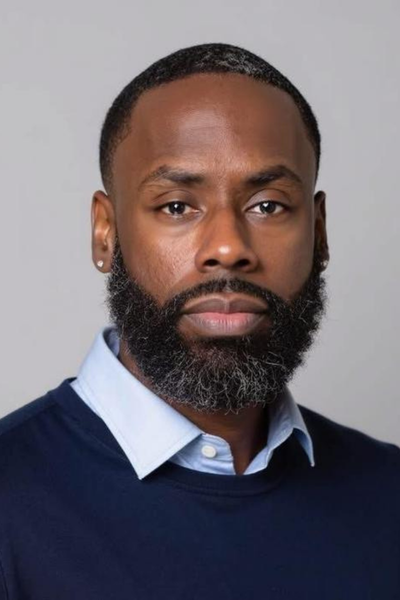
Brandon Nabors, DrPH
Through teaching, research, and community engagement, Nabors is committed to advancing health equity and mentoring the next generation of health professionals.
Brandon M. Nabors, DrPH, is an assistant professor in the Department of Kinesiology and Health Sciences at VCU. His research examines behavioral health, health disparities, and HIV prevention, with a particular focus on improving health outcomes among underserved populations. He is passionate about creating engaging learning experiences that connect theory with real-world public health practice and prepare students to address today's complex health challenges. Through his teaching, research, and community engagement, Nabors is committed to advancing health equity and mentoring the next generation of health professionals.
Q&A with Brandon Nabors
Where did you grow up? Can you tell us a little about your educational journey?
I grew up in Holly Springs, Miss.; a small town in north Mississippi. Growing up in the South gave me a firsthand understanding of how people's environments, experiences, and access to resources can influence their health and wellbeing. Those observations sparked my curiosity about why health outcomes differ across communities and inspired my interest in studying human behavior and promoting healthier lives.
My educational journey has been driven by a passion for understanding the many factors that influence health and improving health outcomes. I earned a Bachelor of Arts in administration of justice from the University of Southern Mississippi, followed by a Master’s of Public Health in behavioral science and health education from Capella University. I later completed my Doctor of Public Health in behavioral health promotion and education at Jackson State University, where my research focused on health disparities, behavioral health, and HIV prevention among underserved communities in the South.
Before joining VCU, I completed a postdoctoral fellowship at the University of Mississippi, where I combined research, teaching, and community engagement. Those experiences strengthened my commitment to helping students connect classroom learning with real-world health challenges and preparing them to make meaningful contributions to improving the health and wellbeing of individuals and communities.
When did you first fall in love with your field of study? What made you decide to work in academia?
I first fell in love with my field of study while pursuing my master's degree. During that time, I was working with the health department, where I began to see firsthand the complex factors that influence health and the persistent disparities affecting many communities. The more I learned, the more questions I had, and those unanswered questions inspired me to continue my education and pursue research that could help address them.
My passion for academia grew through my experiences in the classroom. I discovered how rewarding it is to inspire students, watch their confidence grow, and help them connect what they learn to real-world challenges. For me, teaching is about more than sharing knowledge, it's about mentoring students, encouraging curiosity, and helping them realize the impact they can have on improving the health and well-being of others.
Can you explain the focus of your research?
My research focuses on understanding how behavioral, social, and structural factors influence health outcomes, particularly among underserved populations. Much of my work has examined HIV prevention, health disparities, and behavioral health in the South, with an emphasis on identifying barriers to care and developing strategies that improve access to prevention and health services. I am especially interested in translating research into practical, community-informed solutions that can improve health outcomes and reduce inequities. Ultimately, my goal is to conduct research that not only advances scientific knowledge but also informs programs, policies, and practices that make a meaningful difference in people's lives.
Can you talk a little about your teaching philosophy? What do you most like about teaching?
My teaching philosophy is centered on creating an engaging, inclusive learning environment where students feel challenged, supported, and empowered to succeed. I believe learning is most meaningful when students can connect concepts from the classroom to real-world experiences, so I strive to incorporate active learning, discussion, and practical applications into my courses. I also want my classroom to be a space where students feel comfortable asking questions, thinking critically, and learning from one another.
What I enjoy most about teaching is watching students grow over the course of a semester. There is something incredibly rewarding about seeing a student gain confidence, develop new ways of thinking, or discover a passion for a topic they hadn't considered before. Knowing that I can play a small role in helping students reach their goals and prepare for meaningful careers is what makes teaching so fulfilling for me.
What attracted you to VCU? What are you most excited about in regards to VCU and Richmond?
I was attracted to VCU because of its strong commitment to student success, community engagement, and research that has a meaningful impact. From my conversations with faculty and staff throughout the interview process, it was clear that VCU values collaboration, innovation, and creating opportunities for both students and faculty to thrive. I was especially drawn to the Department of Kinesiology and Health Sciences because of its interdisciplinary approach and its dedication to preparing students to become leaders in improving health and wellbeing.
I'm excited to become part of the VCU community and to contribute through teaching, research, and service. I'm also looking forward to building new collaborations with colleagues across the university and engaging with the Richmond community. As someone who is new to the area, I'm excited to explore everything Richmond has to offer, from its history and outdoor spaces to its vibrant arts and food scene and to make it my new home.
Can you tell us either a quirky fact about yourself or some of your hobbies?
Outside of work, I'm an avid runner and usually log between 150 and 200 miles each month. Running has become an important part of my routine, it helps me clear my mind, stay active, and challenge myself to set and achieve new goals. When I'm not out on a run, you'll probably find me watching crime shows or documentaries. I've always been fascinated by the psychology behind criminal behavior and the investigative process, so a good crime series is one of my favorite ways to unwind.